Researcher Sander Løkkegaard Benner points out that industrial buildings are among the most climate-intensive building types, while also having some of the shortest lifespans. This makes them both a challenge and an opportunity for the green transition.
In his ongoing industrial PhD at the Royal Danish Academy and Arkitema, Benner explores how the typology can evolve. In the next phase of his research, he will develop and test concrete building solutions focused on lower climate impact, adaptability, and circularity.
At EFFEKT, we see the transformation and reuse of industrial buildings as a key strategy in this shift. By working with what already exists, we can extend building lifecycles, preserve embodied carbon, and create new social and cultural value.
Here are three examples from our work:
GAME Streetmekka Viborg
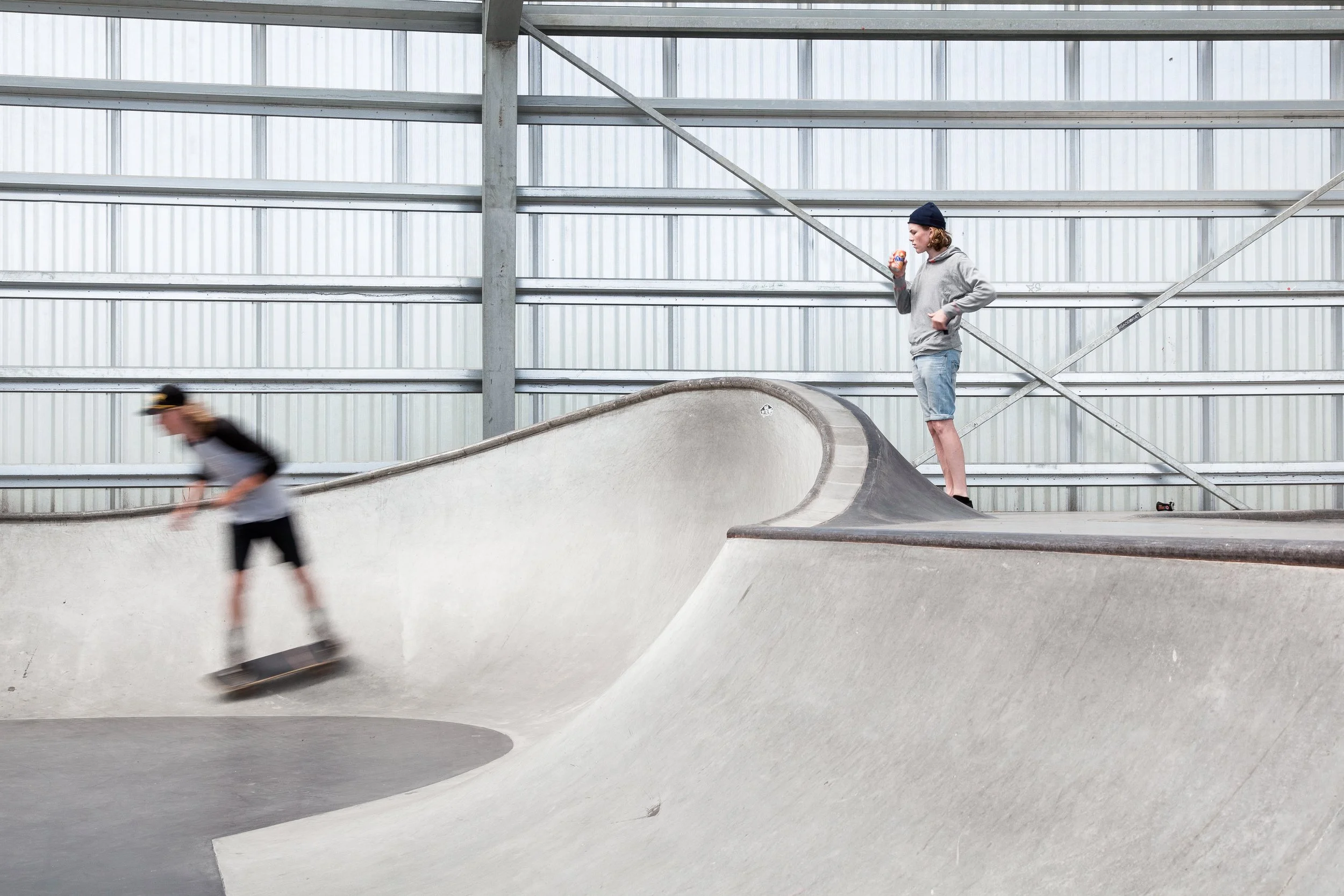
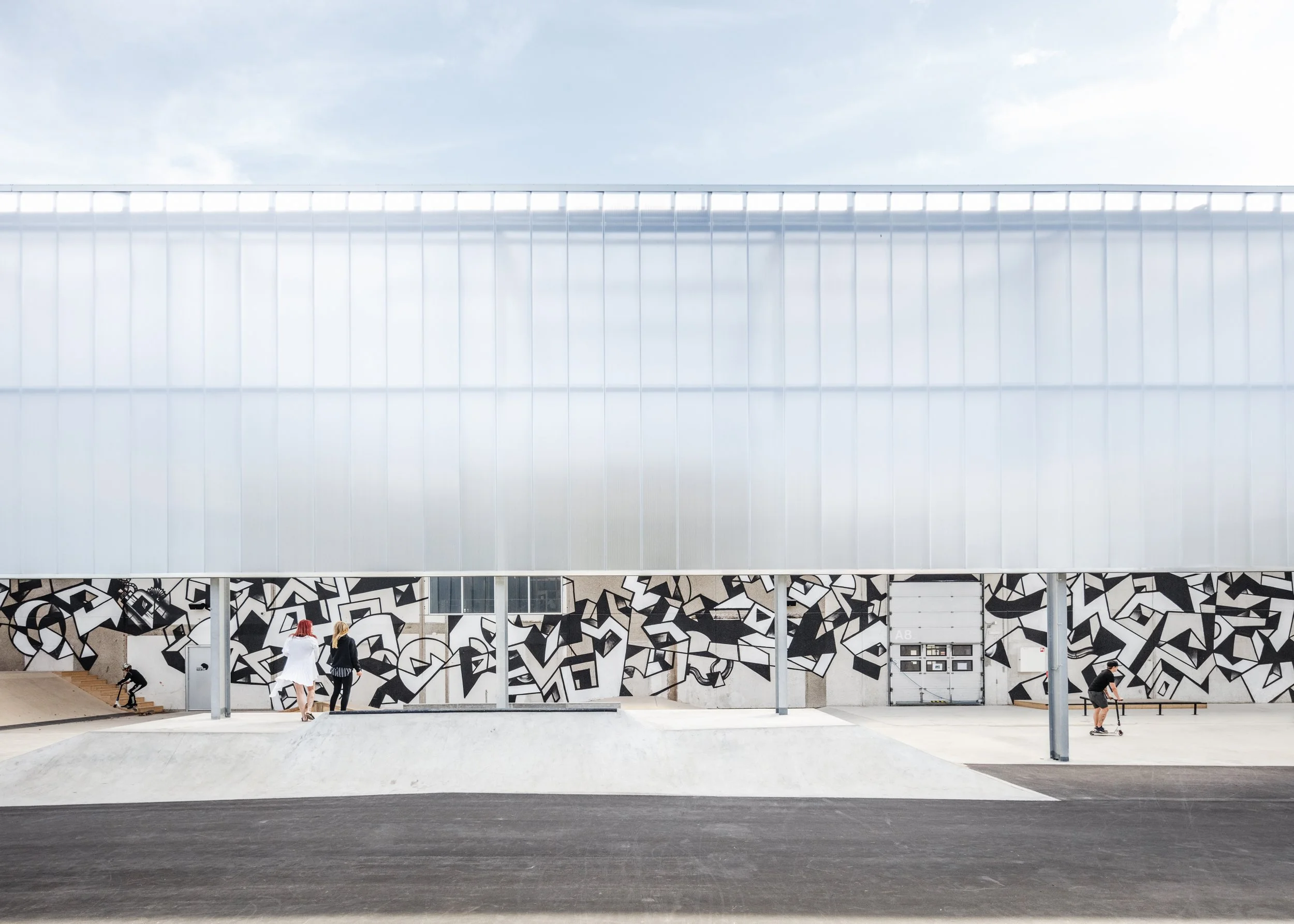
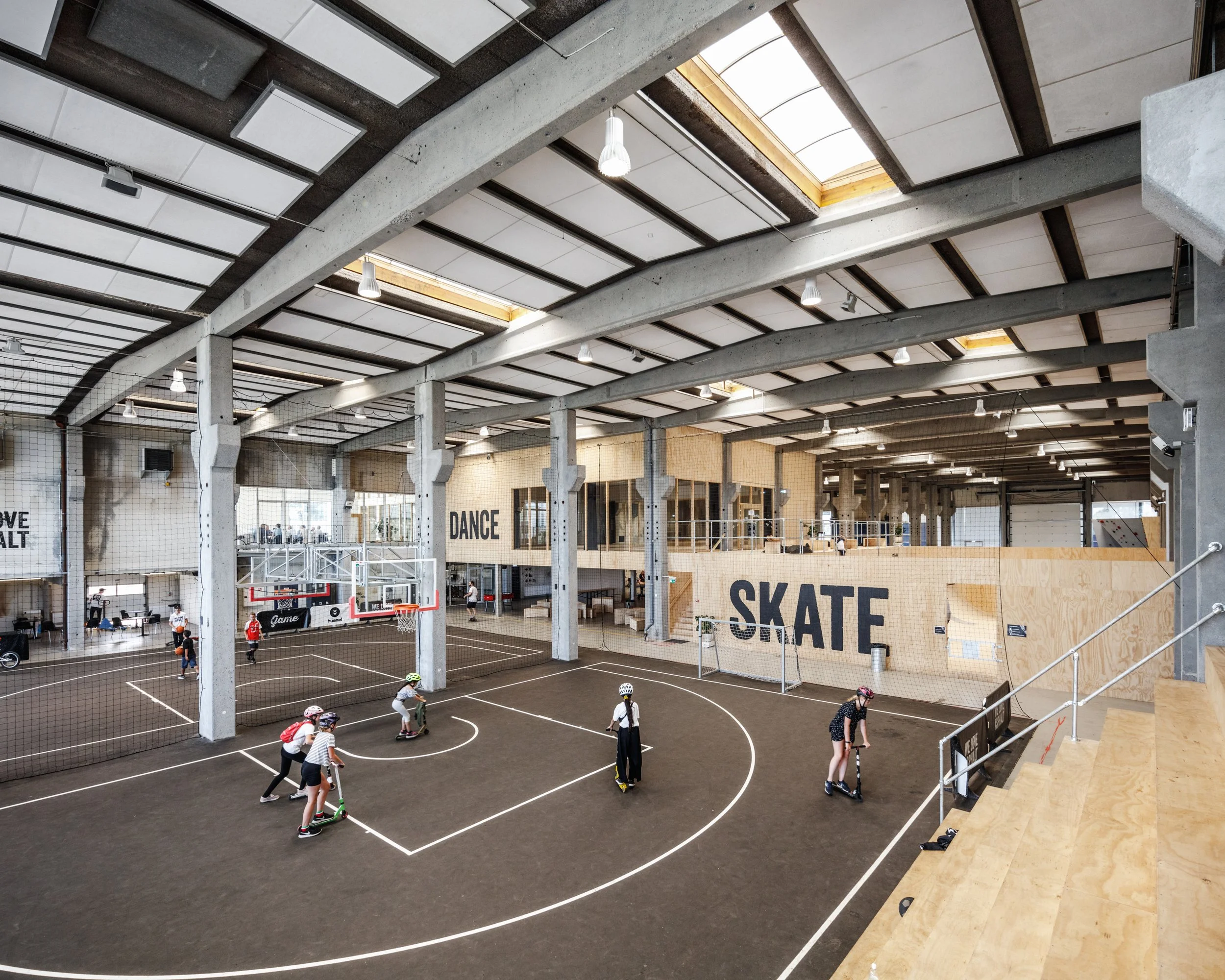
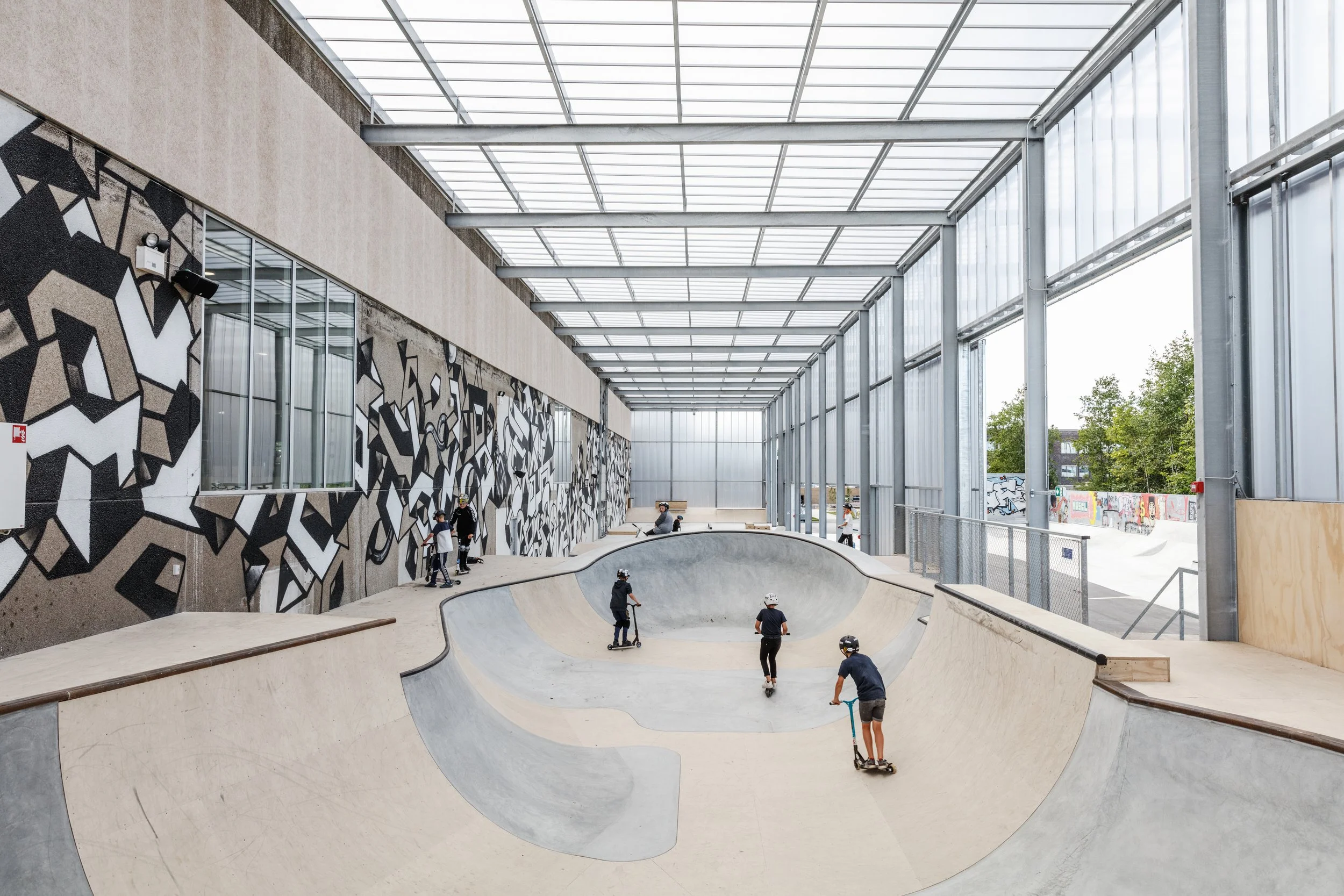
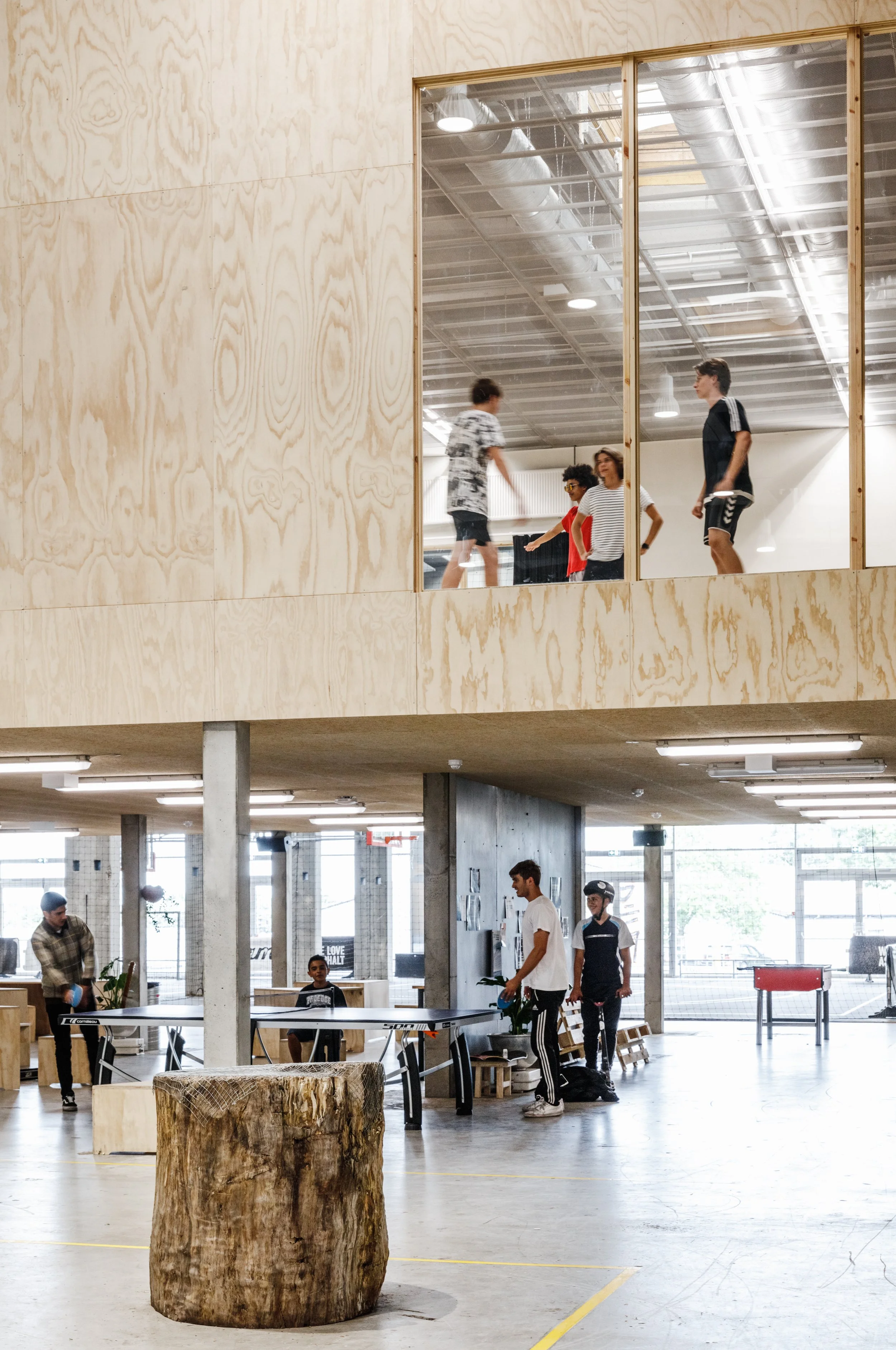
A former windmill factory transformed into a vibrant culture house for street sports and youth culture. The central factory hall becomes a covered streetscape open to the outdoors, while a translucent new skin turns the previously introverted building into a welcoming urban hub. By reprogramming the existing structure, the project preserves embodied energy while activating the building socially.
GAME Streetmekka Esbjerg
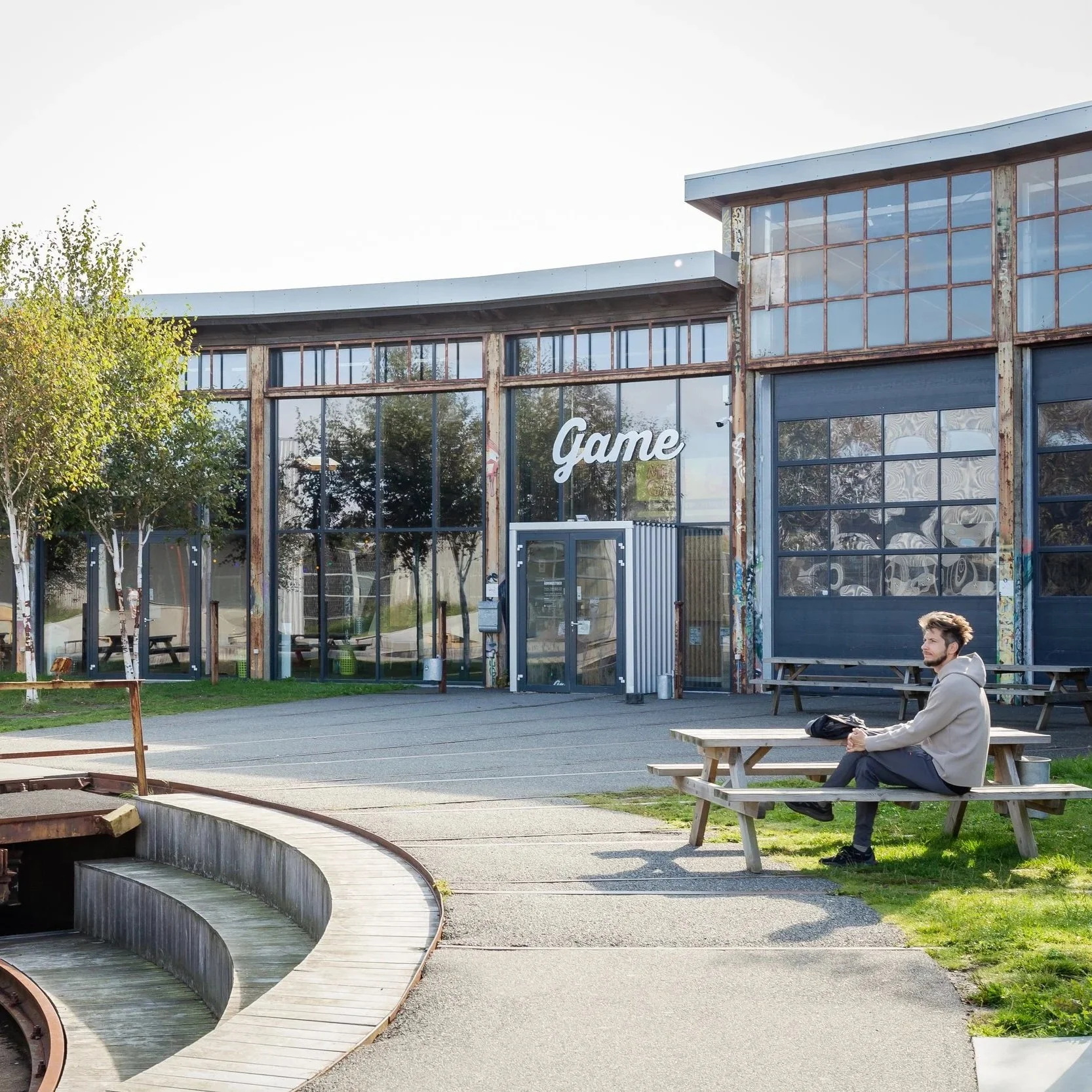
An abandoned historic roundhouse train depot reincarnated as a facility for street sports and culture. Instead of heavily insulating the historic brick structure, most of the building remains unheated and preserved in its raw state. The project prioritizes reuse and low-tech solutions, combining historic preservation with new industrial halls designed for contemporary street culture.
Hal 9, Roskilde (in progress)
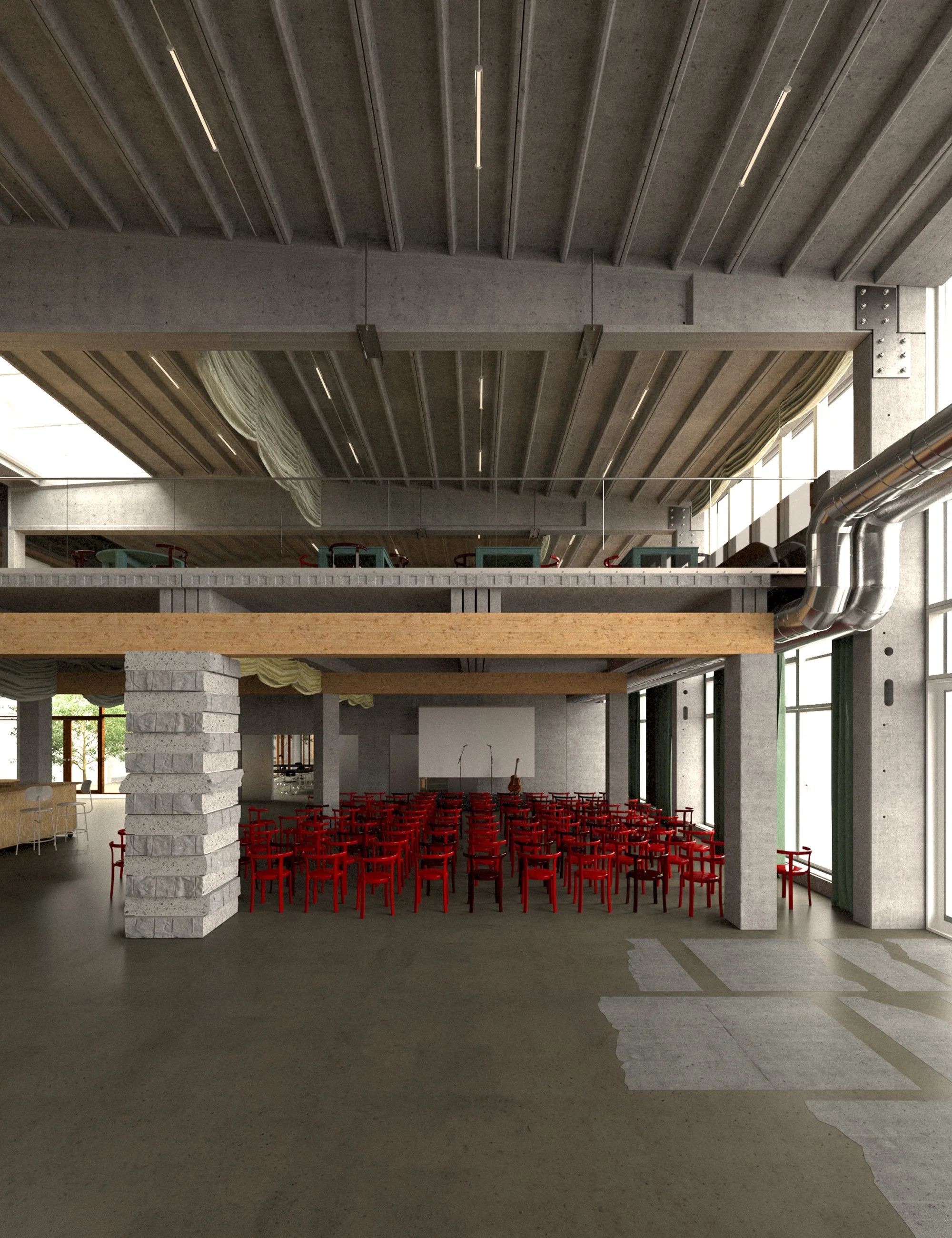
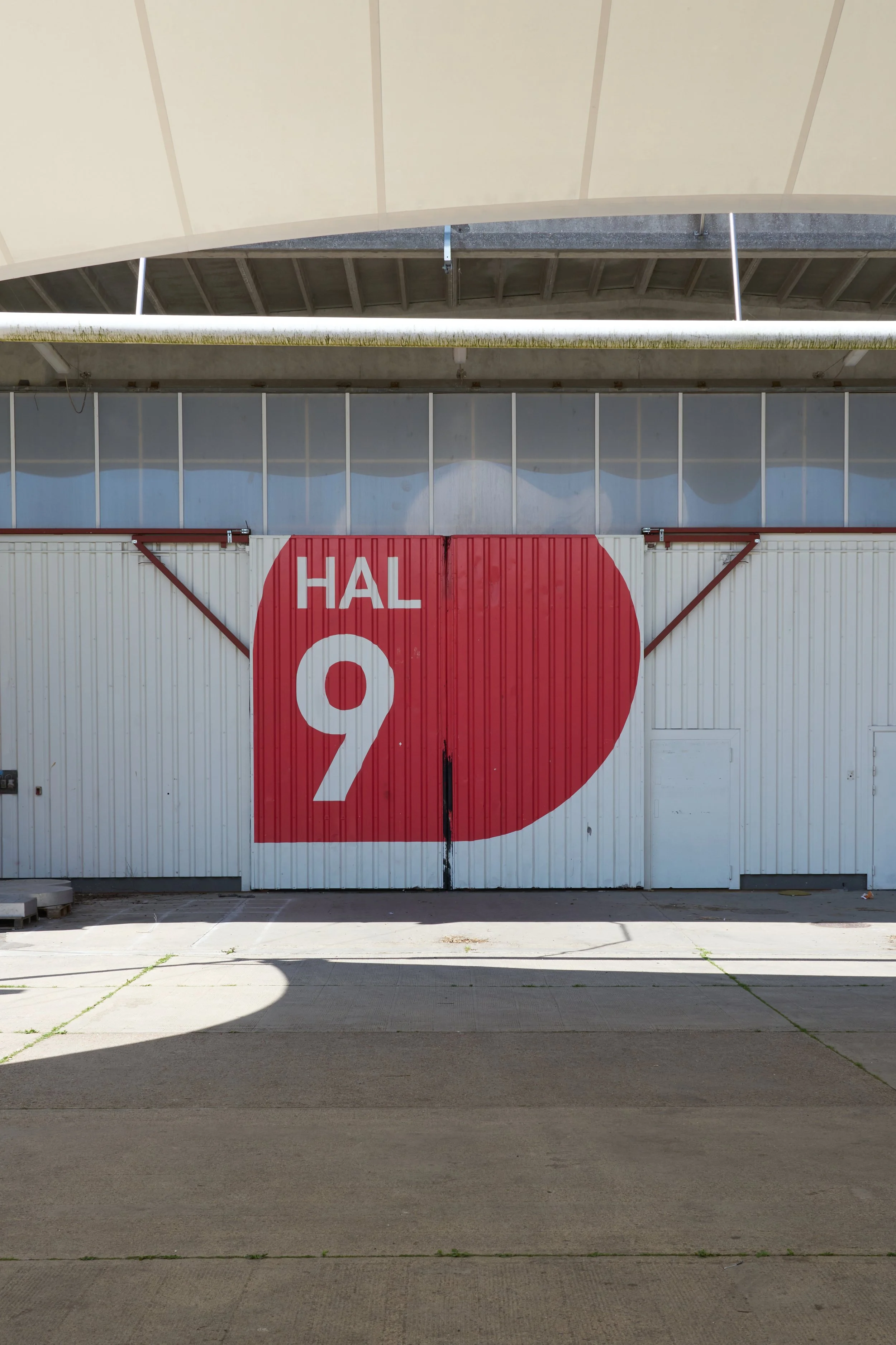
Together with Jespersen Nødtvedt and Artelia, we are transforming a 1,800 m² industrial hall into a new gathering place for employees, volunteers, associations, and communities. The project functions as a test lab for sustainable construction, focusing on reuse, recyclable solutions, and biogenic materials where reuse is not possible – aiming to set new standards for circular building practices.
As the construction sector faces the urgent need to reduce new building volumes while minimizing the climate impact of what we still build, industrial buildings may become some of the most important laboratories for change.
Their flexibility, scale, and often short lifespans make them ideal sites to test new approaches to adaptability, circularity, and reuse.
Photos: Yulia Kozlova, Rasmus Hjortshøj, Peter Dalsgaard